A listening hand, a witnessed answer
Version0.5.3 is a playable review candidate. Its Windows/Linux qualification is pending; its new models, motion and sound mix have not received creator approval. Diablo I remains the binding art direction. Cinematic and narrated gameplay production follows approval of the demo.
The custodian now uses the same world-fitted tools in overhead and first person. At the shrine, both hands meet a constructed censer yoke and altar brace while smoke attends five wax witnesses. The centre hook receives the censer only after all five answer and its chain settles. Working hands follow the real moving handle axes; their resting cuffs no longer overstretch the arms. The engine's drive, cup, sight glass and metal surfaces remain one local service exemplar. These are original procedural forms still needing artistic review.
Stand steadily at the engine with free hands and press L to attend its listening pin. Give the conducted pulse time to separate from battle: grind and two uneven knocks call for comparison with bearing load and film; rising steam and three pipe knocks call for comparison with the return gauges. A restrained pair of relay clicks signals mechanical accord. This act gives no repair, reagent or proof of spiritual purity. L, movement, routing, another tool, a weapon, danger or pause withdraws the hand. Muted play preserves the material caption.
Priest speech now softens the background diesel and exterior battle while meaningful local witness sounds retain their authored level. Withdrawing the listening hand stops its unfinished conducted knocks; they cannot revive on immediate reattachment. The original cannon and mechanical samples remain, with no new human voice assigned to the machine spirit.
Actual isolated practice completed the preceding shrine contact's five wax witnesses and centre rest with zero wear and one incense/one seal. Its initial crowded close-up was rejected and the grips moved clear of the wax. The later priest wrist and taper inspection verified both actual engine contacts with zero overreach; that paid inspection was deliberately left unfinished. A separate delayed engine trial recovered its already funded tools and played done-engine, but incurred twelve wear and ended at88% condition. These observations establish real control and honest consequences; they do not establish a fast novice route or enjoyable balance.
- Actual first wax witness in first person
- The same paid shrine work overhead
- Actual engine grips after the wrist correction
- The listening contact during a real completion voice
- Bounded actual mix and withdrawal receipt
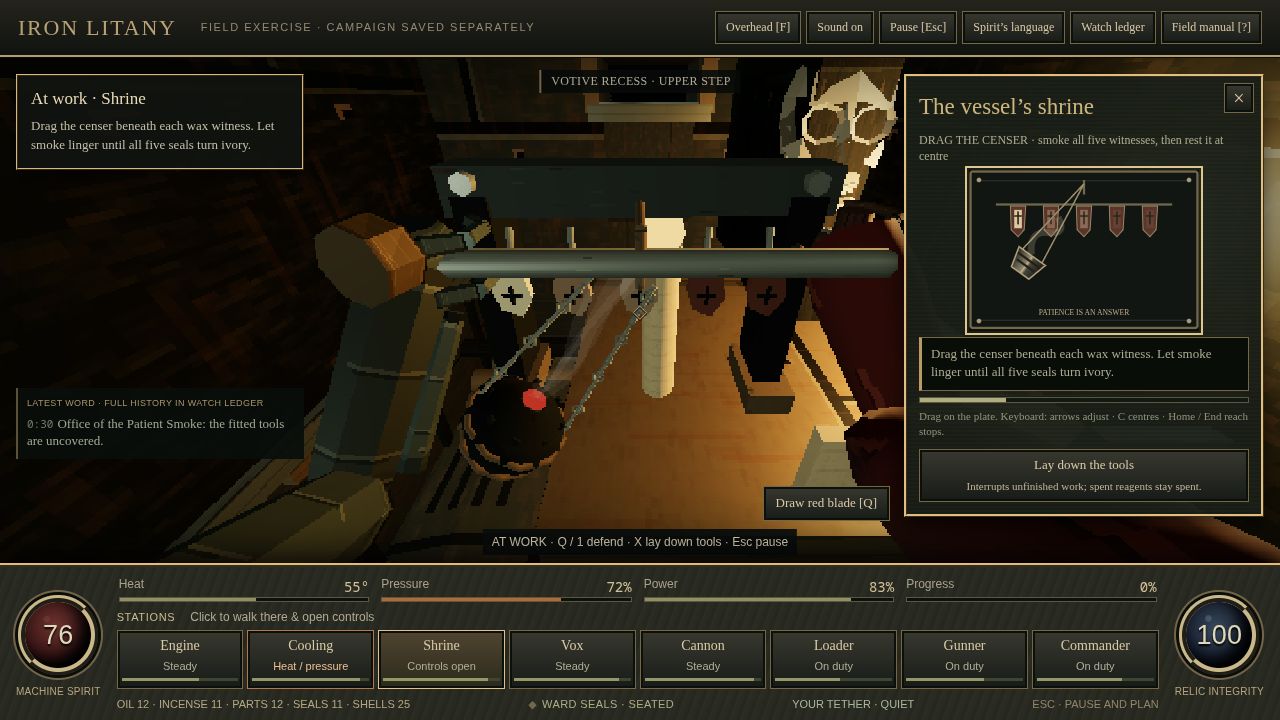
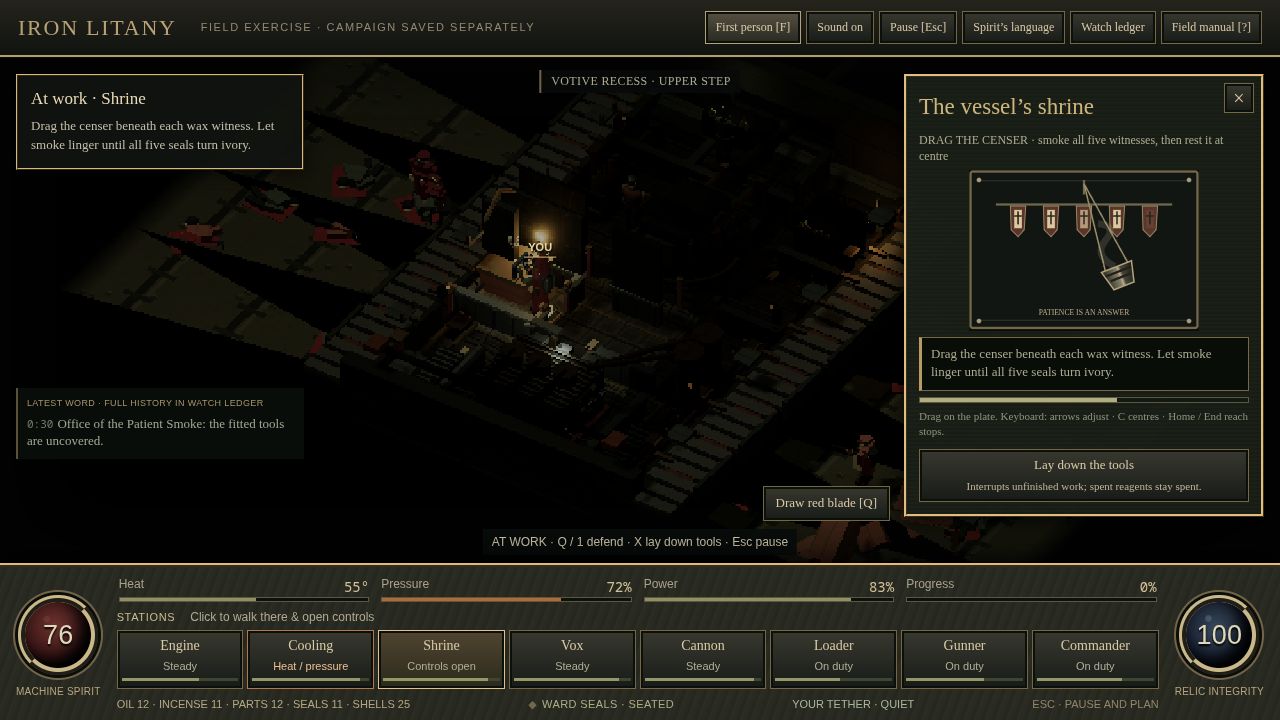
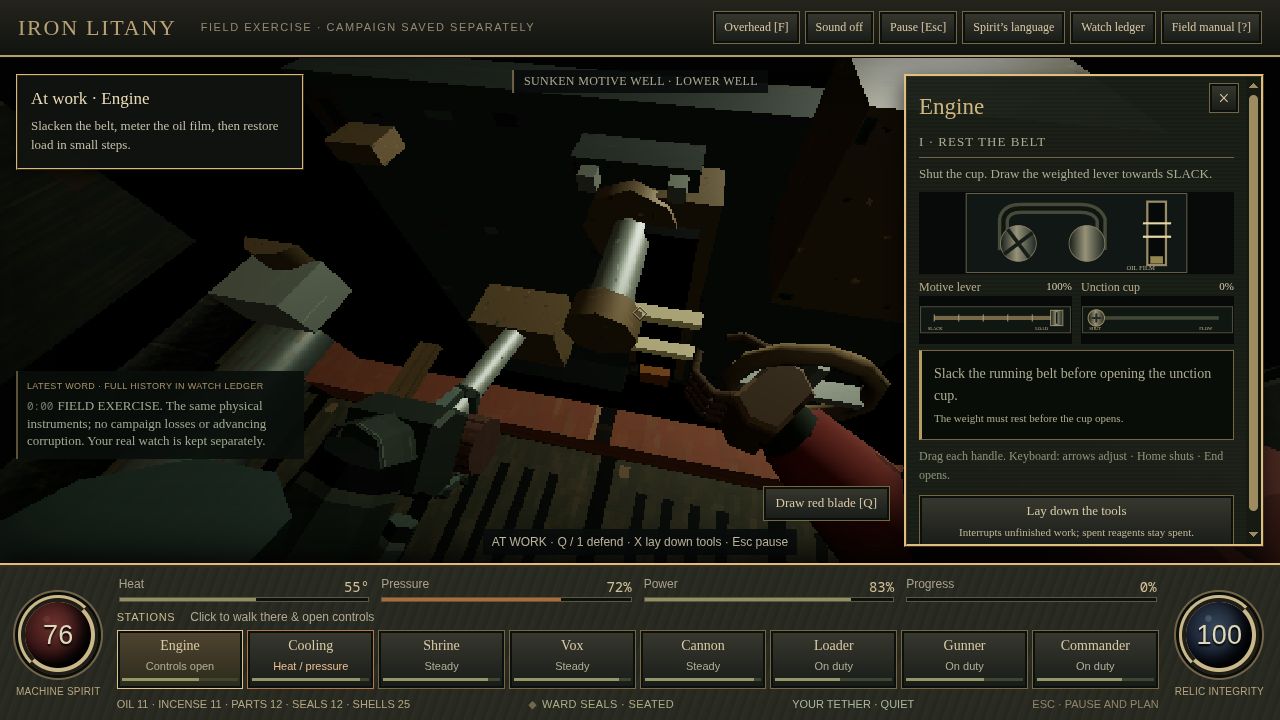
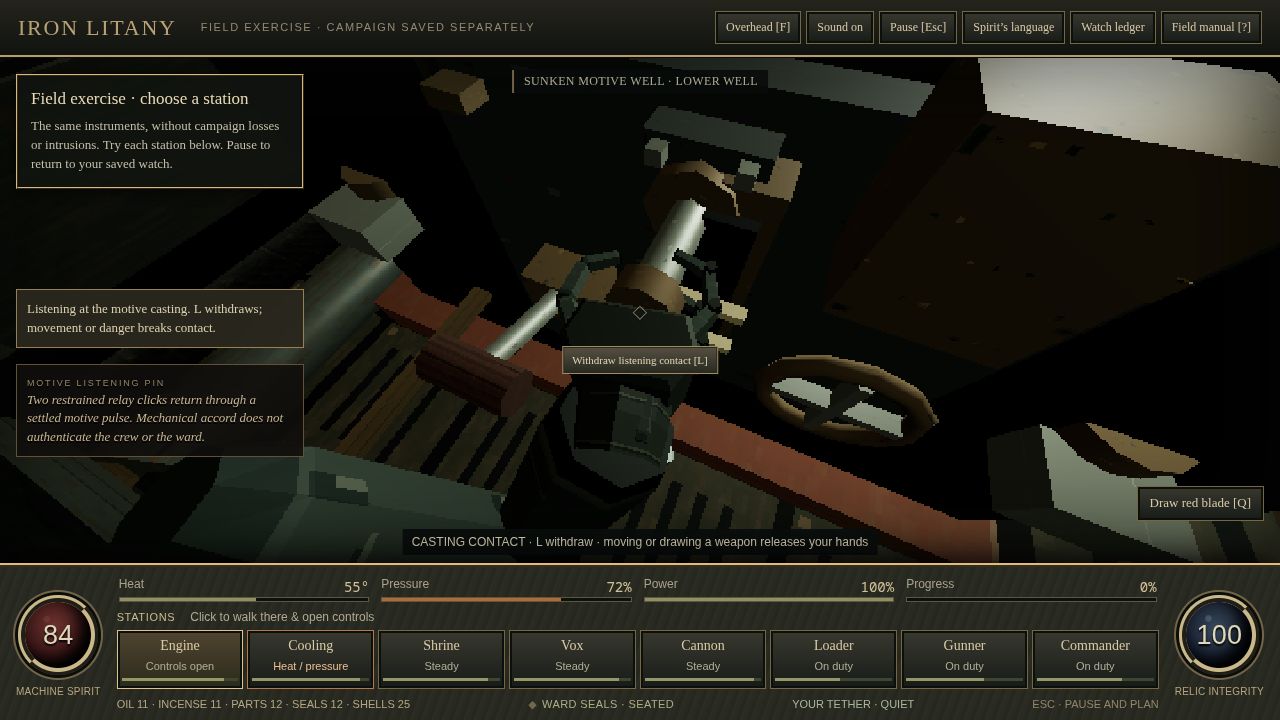
238 automated checks pass before this dossier update. A later ordinary-key censer trial also completed all five through three carefully paired working stops and the final centre rest, with zero wear and unchanged preparation. Comparative timing remains pure simulation; the actual trial contained long analysis delays. Advanced repair disclosures now remain open through passive changes at the same station; an actual F rebuild retained the repair and its paid part/spirit consequence. The prepared desktop extension additionally performs a paid shrine office, changes cameras without losing its work, checks both actual hand contacts, observes five-wax binding and requires a fresh completion with exactly one incense/one seal spent. It also exercises L/F/W/Q, mute, pause and reattachment boundaries. These prepared checks are not an observed native pass.
The core watch retains its eleven dimly separated, staggered areas and eight narrow exterior cones. Chaos warnings, creature defence and source binding remain independent from vessel wax and the custodian's own tether. The crew can be replaced at repair stops; the relic cannot. Human play, sustained listening and integrated art acceptance remain the next review gates.